

Videos
Short form
In this short video, I focus on 5 key tips to keep in mind when designing costumes. While the video goes over the main points, this blog takes a closer look at the three costume designs and how I applied these ideas to each character.
Introduction
Hi! I'm OverOffYonder, and I'll be showing you how I approach costume design by putting the same character into three very different scenarios: a member of a band, a circus performer, and a mechanic.
Rather than designing an outfit based only on what looks cool, I'll focus on how a character's role, environment, activities, weather, and practical needs can influence what they wear and what they carry.
Along the way, I'll also share some simple clothing tips, from building the main shapes and choosing suitable garments to adding details and accessories that help communicate the character's story.
Ideas
You can start with pretty much anything. Think of a character, a universe, a profession, a time period, a specific environment, or even something as simple as “an ordinary person.” There are no rules for where the idea has to come from.
For this tutorial, I decided to put the same character into three completely different scenarios: a memer of a band, a circus performer, and a mechnaic working with robots. This gives us three very different costume-design problems to work with.
If you're struggling to come up with an idea, try combining a character with a simple prompt:
A royal guard in a world where it never stops raining
A circus performer who specializes in aerial acts
A mechanic working on machines in a desert
A fisherman living in a frozen village
A courier who travels through a dangerous forest
A musician performing for royalty
A scientist working in an underwater facility
A farmer living on a space station
A thief who has to blend into a wealthy city
A student preparing for a dangerous school competition
You can also start with the conditions rather than the character.
Ask yourself: Where do they live? What do they do all day? What is the weather like? What do they need to carry with them? What could make their job easier or safer?
These questions give you something to design around, instead of having to invent an entire costume from nothing.
Inspiration
Now that you have an idea, it’s time to do some research. There are so many places you can take inspiration from, and you don’t have to limit yourself to references that directly match your subject.
Research
For example, if you’re designing a circus performer, you could look at actual circus costumes, but you could also look at fashion, stage performances, films, paintings, music, or even literature that gives you the feeling you want.
You can search online, but don’t forget about your own collection of references. Personal photos, books, things you’ve seen in real life, places you’ve visited, or experiences you’ve had can all influence a design.
A reference might make perfect sense to you without being immediately obvious to someone else, and that’s completely fine. In fact, mixing references that come from different places can make the final design feel much more personal and unique.
The goal isn’t to find one perfect picture to copy. Gather things that give you ideas for shapes, clothing, materials, colors, accessories, atmosphere, and details, then see how you can bring them together into your own design.
Character sheet
For this tutorial, I’ll be using the same character for all three scenarios. She has long pink hair and a lean body type. I created a simple character sheet to establish her basic appearance before designing the costumes.
I used it to sketched some initial ideas directly on the sheet while looking through my references. This gives me a starting point to work from while still leaving plenty of room for the character to change depending on the scenario.
Costume 1: Circus Performer
Idea
I started by looking at the visual language commonly associated with circuses and thinking about what I wanted this character to communicate at first glance.
Circus costumes often have a very recognizable look. Red, white, and black are especially common, along with stripes, diamonds, and other bold patterns. I also noticed that blue can sometimes be used in place of black, which gave me another color option to work with.
I wanted the character to immediately read as a performer, so I built the outfit around a corset, puffy sleeves, bloomers, and tights. For the tights, I used two different patterns: one leg has red and white stripes, while the other uses a diamond pattern. Using different patterns on each side helps make the costume feel more playful and theatrical.
I also wanted to bring in the idea of theatre masks, so I designed a headpiece made from several masks that the performer could switch between. This gives the accessory a purpose while also making it feel like part of her performance.
The hair was another opportunity to push the theme. Instead of leaving it loose, I swept it to one side and styled it into large curls that resemble springs. The exaggerated shape makes the character feel more energetic and adds to the overall stage-performer aesthetic.
Finally, I decided what kind of performer she actually is. I imagined her working with fire, so I gave her a staff that can be lit at both ends. This also shows how the character's job can influence the objects she carries. Rather than adding an accessory just because it looks interesting, the prop tells us something about what she does.
Final
The important thing here is that the costume wasn't designed by simply collecting circus-looking elements. The setting, role, performance style, and practical needs all gave me things to design around.
Costume 2: Mechanic
For the second scenario, I wanted to design her as a mechanic who works on large robots and flying ships. This time, I focused much more on what she actually does and what she would need while working.
Idea
Since I imagine her spending most of her time inside hot workshops surrounded by machinery, I didn't want to give her a complicated outfit just for the sake of it. Instead, I focused on the equipment she would have with her and how it could make her work easier.
One of the first things I designed were her boots. They have large magnetic pads on the front of the feet and another set just below the knees. I imagined she could use these to attach herself to the side of a flying ship while working on its exterior, allowing her to keep both hands free.
She also has a harness around her hips and thighs, where she can keep the smaller tools she needs frequently. This keeps everything within reach without having to constantly return to a toolbox.
On her back is a larger mechanical backpack that is secured around her shoulders and waist. It contains additional magnets for extra support while working on ships, as well as tools and storage compartments. I imagined the backpack holding some of her heated tools, such as a soldering iron, along with other equipment she might need.
The backpack also has a part that extends upwards and holds a visor. The visor can act as a monitor while she works, giving her access to information without needing to stop and use a separate computer.
For her non-dominant hand, I designed a computer built into a sleeve-like device. She can use it to detect and troubleshoot problems, fix software bugs, or look at schematics while working. Keeping it on her left hand means her dominant hand remains free for tools and repairs.
With this design, I wanted the equipment to tell us almost everything about her job. The magnets tell us that she works on flying or just very big machines, the tools show us that she repairs them, and the computer and visor show us that her work involves both physical machinery and technology.
Final
This is a useful way to approach costume design when you're stuck: instead of asking “What would look good on this character?”, ask “What does this character need to do their job?”. The answers can give you a whole collection of design ideas before you've even started thinking about decoration.
Costume 3: Band
For the last scenario, I wanted her to be a member of a band. Unlike the mechanic, where most of the design came from function, this costume gave me much more freedom to focus on personality, stage presence, and visual identity.
Idea
I wanted her outfit to feel full and slightly chaotic, with lots of asymmetry and punk-inspired elements. Instead of keeping the costume balanced on both sides, I mixed different shapes, layers, and accessories to give it a more spontaneous feeling.
Since she is the bass player, I also designed her bass as part of the character rather than treating it as a separate prop. I gave it a funky, asymmetrical shape that is roughly inspired by a star, making it feel like something that belongs specifically to her.
Her hairstyle is also more exaggerated than in the other designs. I made it more layered and sharp, with colorful sections worked into it. Combined with the fun makeup, this helps push the character further into a stage persona.
I also added a lot of accessories and smaller details to fill out the design and reinforce the punk-inspired look. Since the shirt is quite short, I paired it with tights to keep the outfit visually connected while giving the lower half of the costume more room for details.
Final
Compared to the other two designs, this costume isn't as focused on solving practical problems. Instead, the question becomes: “What would this character choose to wear when she wants to be seen?”
The same character is still recognizable underneath all three costumes, but changing her clothes, hair, accessories, and the things she carries allows a completely different side of her personality to come forward.
Costume Design Tips
1. Start with the silhouette
Before adding patterns and small details, look at your character as a simple silhouette. Think about where the largest shapes are and how the costume changes the character's overall proportions.
A strong silhouette can already tell you a lot about the character before you see any details.
2. Design around their job
Ask yourself what your character actually does. Do they need to move freely? Stay protected? Work in a specific environment? Carry equipment?
These questions can directly influence the clothing you choose. A mechanic working on flying ships, for example, might need completely different clothing and equipment from someone performing on a stage.
3. Give accessories a purpose
When adding accessories, try asking “Why does this character have this?”
*I’m not saying that the mechanic can’t wear accessories, but in this case, the jewelry felt like an afterthought because it didn’t connect to her character. If I wanted to make her more eccentric, I’d instead personalize the equipment she already uses, for example with colorful parts or stickers. That way, the extra details still support her personality and the overall design.
The same idea works for the band member, where accessories feel more natural because self-expression is already part of her character and stage persona.
It could be something they need for their job, something connected to their personality, something meaningful from their world, or simply something they enjoy wearing. Giving details a reason makes them feel like part of the character rather than decorations added at the end.
4. Don't forget the other sides
Costumes exist in 3D, so remember to think about the front, side, and back of your character.
Check where straps connect, how accessories are attached, where pockets or equipment go, and whether different parts of the costume might get in each other's way. This is especially important when designing backpacks, harnesses, capes, or other larger pieces.
5. Choose something to exaggerate
You don't have to make every part of the costume equally complicated. Pick one or two ideas that represent the character and push them further.
It could be an unusual hairstyle, oversized boots, a distinctive accessory, a strange instrument, or an interesting pattern. These larger choices can give the character a stronger identity while the smaller details support them.
Material rendering for impatient artist
It’s me. I am the impatient artist and I like to render fast and messy :>
So here is simple way I render.
Brushes used
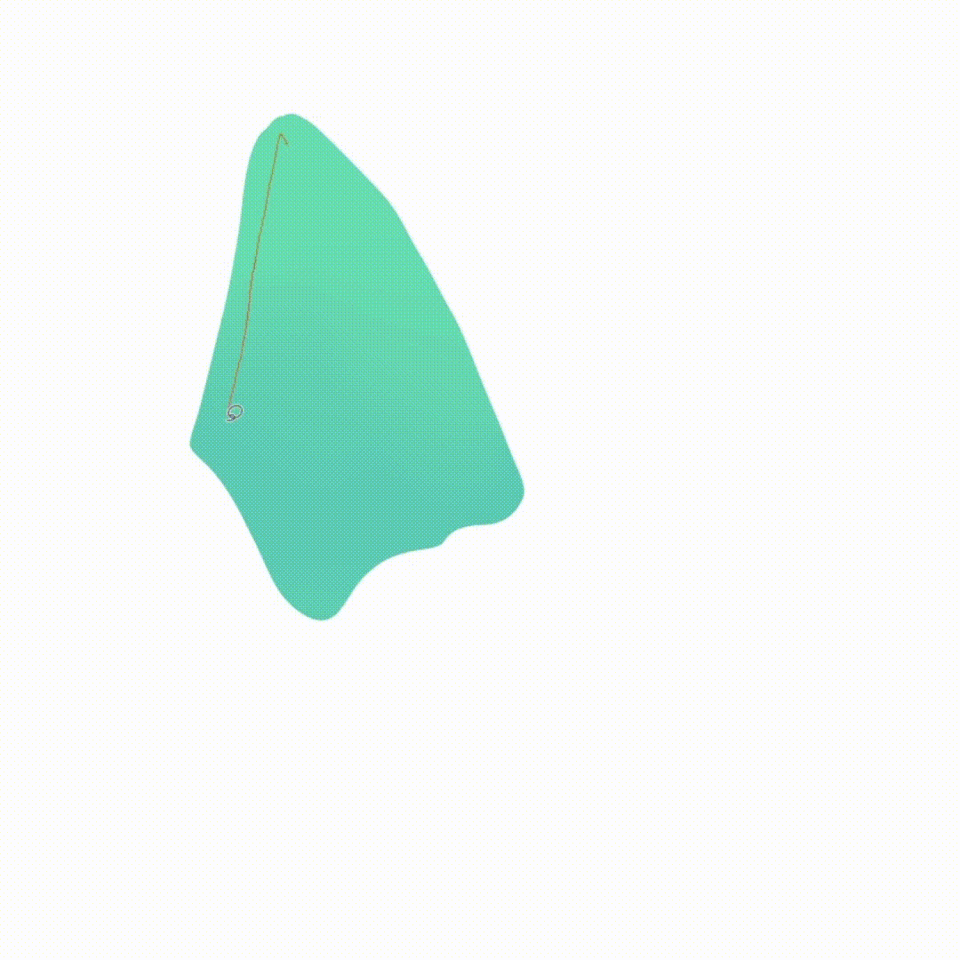
Fabric
Fill the object with a solid base color
Add some color variation across the whole object
Use the Lasso tool to create the shadow shapes
Use the Paint and Apply brush to soften the hard edges where needed
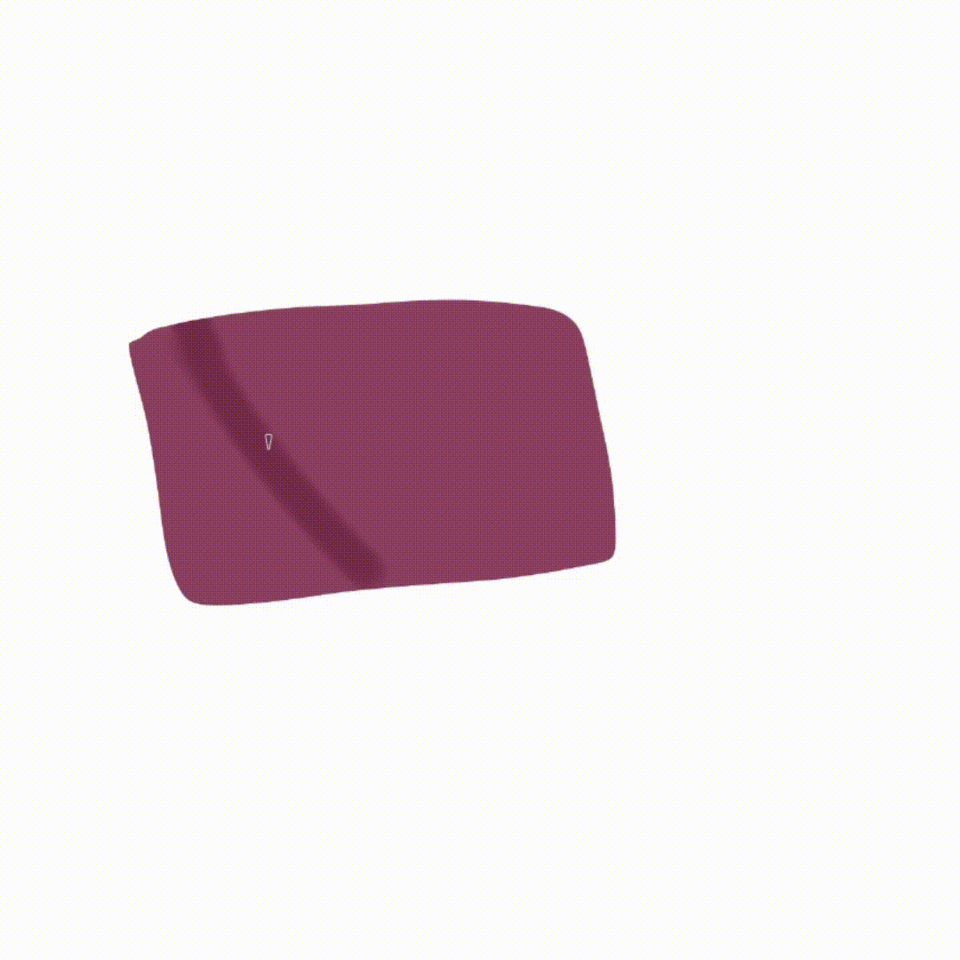
Leather
- Start with the same process as fabric: base color, color variation, then shadow with the Lasso fill
- Add a lighter color to the areas facing the light
- Put a Screen texture over the whole object ( brush tool linked )
- Adjust the texture's color and opacity so it fits the material
Gold
Start with the base gold color
Follow a simple light-to-dark color pattern

If the gold area is small, I usually just place blobs of different colors rather than carefully blending them
The contrast between those colors is enough to make it read as a shiny material
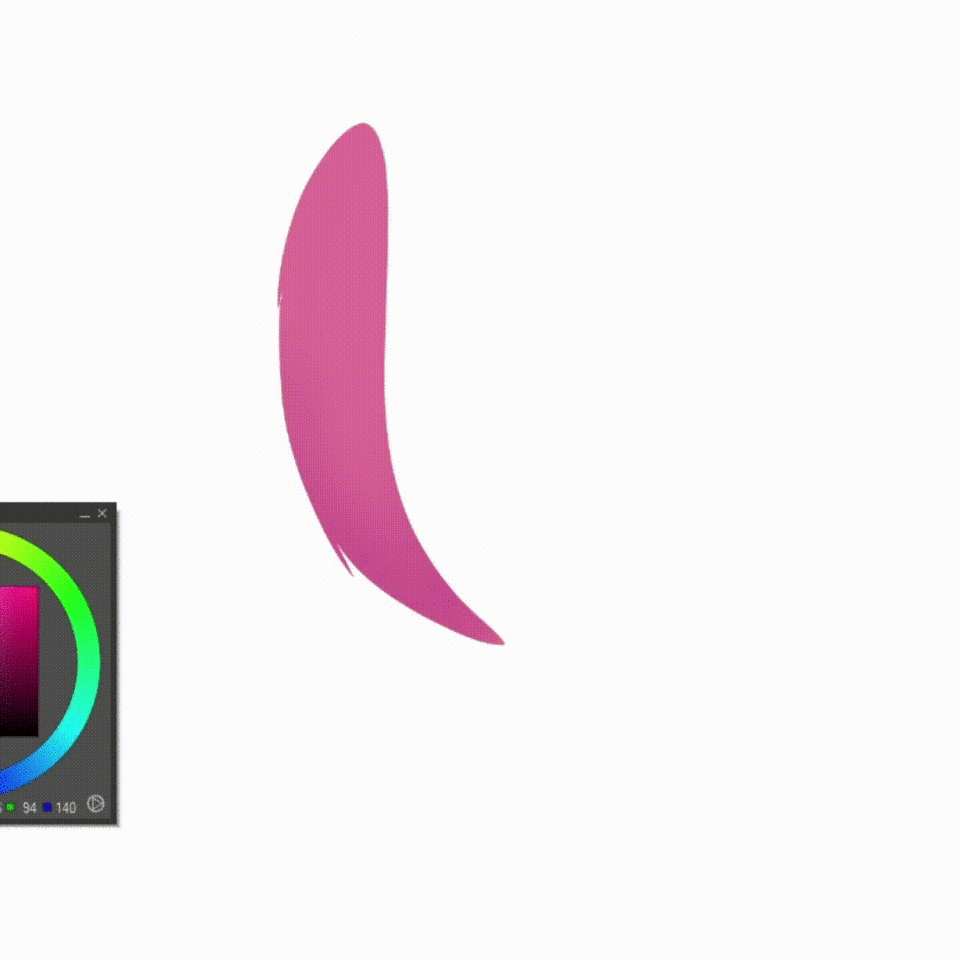
Hair
Fill the hair with a solid color
Add the main shadow.
Add a reflection using a color similar to the hair
Add a second, more colorful reflection to make it more interesting
Use the Lasso fill to add larger individual strands and break up the shapes
Conclusion
Designing a costume doesn't have to start with a perfect outfit in mind. Start with the character and their world, then let their role, personality, environment, and needs guide your decisions.
So next time you're designing a costume, try asking yourself:
What does this character do? What do they need? What would they choose to wear?
Once you have those answers, you can start turning them into shapes, clothing, accessories, and details that make the character feel like they belong in their world.
I hope this tutorial gave you some ideas for designing your own costumes. Have fun creating!
Users who liked this post




Comment