

How I use makeup to shape personality, not just appearance.
Introduction
Have you ever wondered why characters with the same face can leave completely different impressions?
One feels gentle and comforting. Another feels mysterious. Another immediately gives the impression of a villain.
Suprisingly, the difference isn’t always in the anatomy.
For this project, I challenged myself to keep the same character while changing only the makeup design. Instead of redesigning the face, I explored how subtle decisions in color, shape, and placement could completely change the character’s personality.
In this article, I’d like to share the five makeup decisions I use when designing charming characters. Although my demonstration uses a semi-realistic style, these ideas can also be applied to anime, manga, stylized, or painterly illustrations.
Decision 1: Start With The Emotion, Not The Colors
Before choosing any makeup colors, I always ask myself one question: “What should the audience feel when they look at this character?”
This question becomes the foundation for every decision that followed.
For this demonstration, I wanted the character to feel gentle, comforting, and approachable.
Because the emotional goal was already clear, choosing colors and makeup placement became much easier.
Instead of decorating the face, every brushstroke serves the intended impression.
Decision 2: Built One Harmonious Color Family
Many beginners choose beautiful colors individually.
Instead, I prefer thinking in terms of a color family.
For the gentle version, warm pinks were shared across the eyes, cheeks, and lips.
Using related colors creates visual harmony, making the makeup feel naturally connected instead of looking like separate elements.
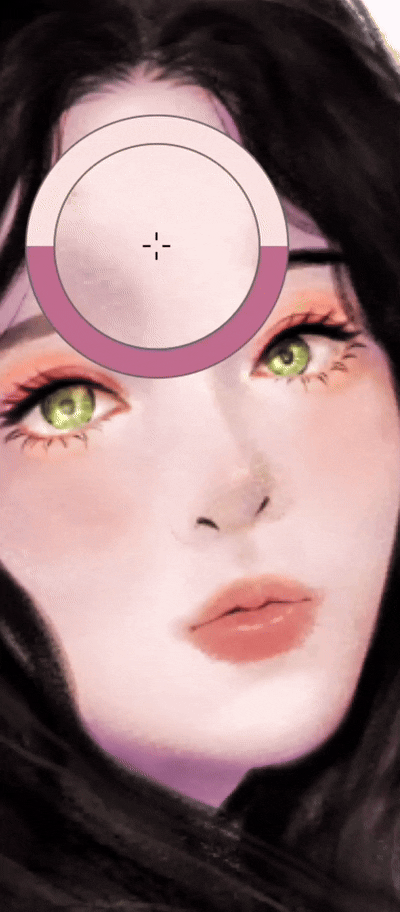
Harmony often creates a stronger impression than using highly saturated colors.
Decision 3: Use Makeup To Support Facial Volume
This is probably the biggest difference in my workflow.
I don't treat makeup as something painted on top of the skin.
Instead, I use it as another layer of the painting process.
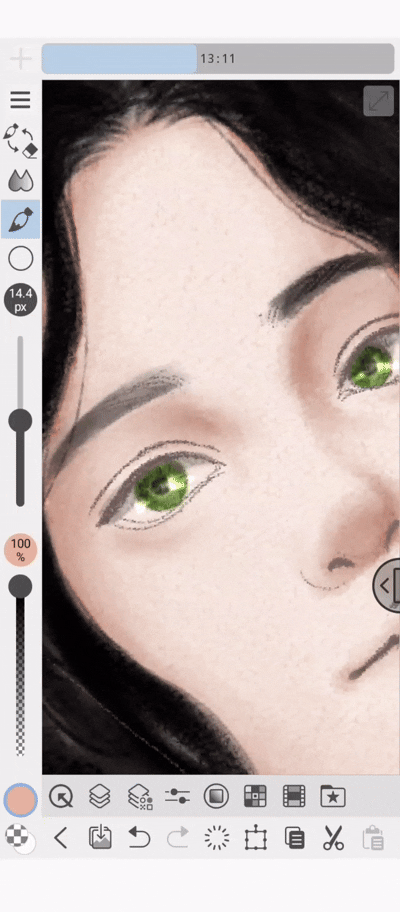
Soft blush reinforces the cheeks.
Eyeshadow follows the curvature of the eyelids.
Lips colors help define the form of the mouth.
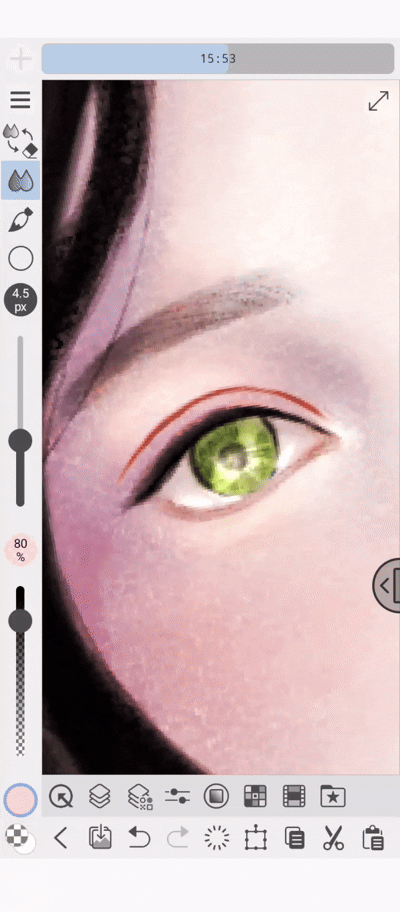
Because I paint everything with watercolor brushes and textured blending, the makeup naturally merges with the skin while enhancing the three-dimensional structure of the face.
Decision 4: Create One Clear Focal Point
Not every facial feature needs to complete for attention.
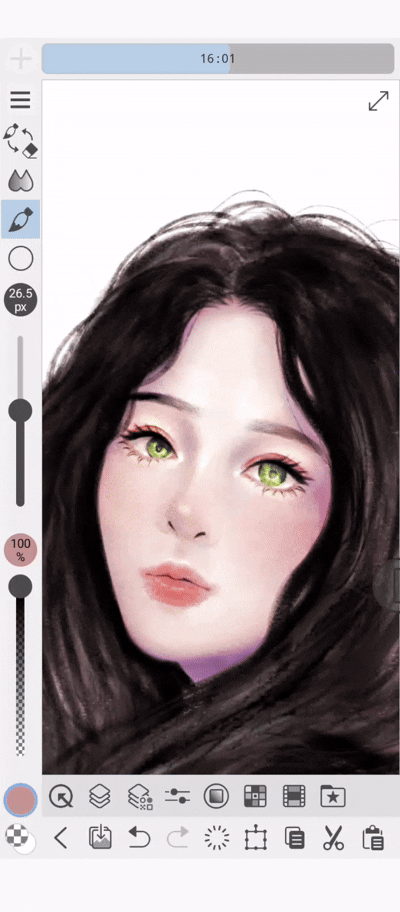
For this portrait, I wanted viewers to notice the eyes first.
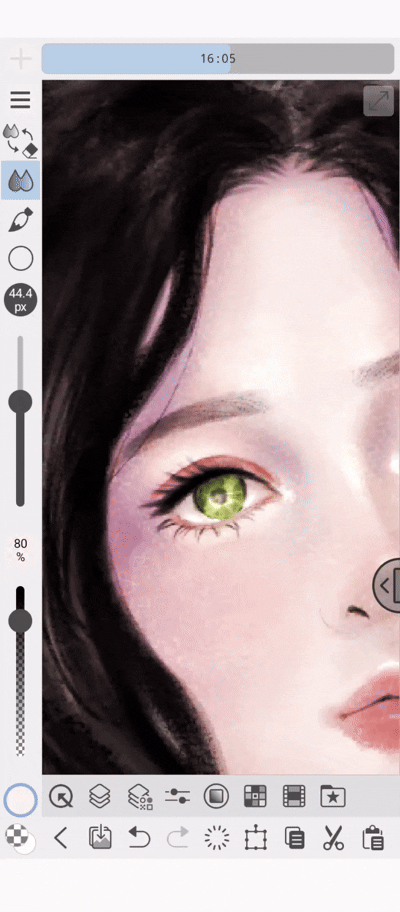
Because of that, the eye makeup became the strongest visual element, while the blush and lips remained softer.
Reducing visual competition allows the focal point to feel stronger without increasing detail everywhere.
TIP:
After finishing the makeup, I noticed that each color looked slightly disconnected from the skin. To restore harmony, I added a soft peach layer using Overlay mode across the face and exposed skin. This subtle color wash unified the makeup and skin under the same lighting, making the portrait feel more cohesive.
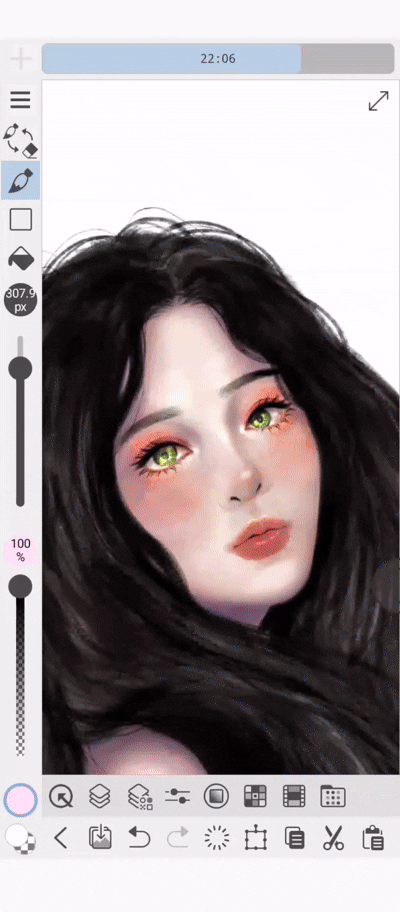
From this
To this
Decision 5: Small Changes Create Different Personalities
The interesting part of this experiment wasn’t creating one makeup style.
It was discovering how small adjustments could completely change the personality of the same character.
Changing the eyeshadow shape.
Moving the blush placement.
Adjusting the lip color.
None of these decisions changed the anatomy, yet each version told a different story.
Beyond Technique
What I enjoy most about makeup design isn’t making a character prettier.
It’s using visual decisions to guide the viewer’s emotions.
A gentle character invited trust.
A mysterious character creates curiosity.
A villain creates tension.
Those impressions begin long before the audience notices the individual colors.
They begin with the design decisions behind them.
Conclusion
Whether you draw anime, stylized portraits, painterly illustrations, or semi-realistic character, makeup can be more than decoration.
It can become a storytelling tool.
The next time you design a character, don’t start by asking: “Which color should I use?”
Instead, ask yourself: “What should the audience feel?”
The answer to that question will guide every artistic decision that follows.
Les utilisateurs qui ont aimé cette publication








Commentaire